
LINCOLN, NE – September 02, 2026 – PRESSADVANTAGE –
Black Label Decks & Outdoor Living has issued guidance for property owners on how sustained dry conditions affect deck footings, following drought data published for Nebraska this summer.
The U.S. Drought Monitor, produced by the National Drought Mitigation Center at the University of Nebraska-Lincoln in partnership with the USDA and NOAA, placed the large majority of Nebraska under active drought in late July, with severe and extreme categories covering a substantial portion of that area. The preceding winter ranked among the warmest and driest recorded in the state.
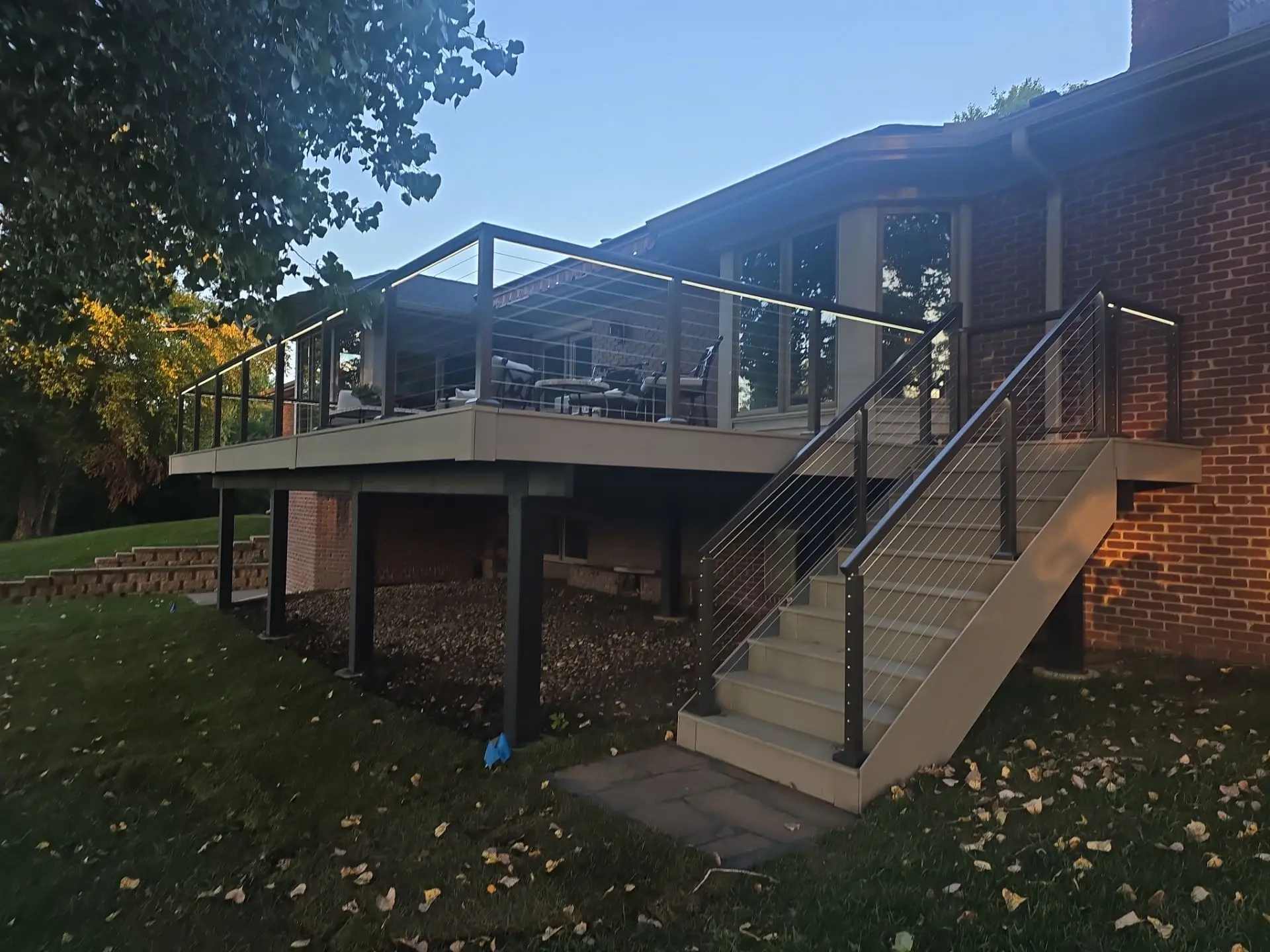
Soils across Lancaster County contain clay that expands as moisture increases and contracts as it withdraws. The USDA Natural Resources Conservation Service publishes shrink-swell ratings for individual soil map units through Web Soil Survey, a public database that reports expected volume change for a given soil, along with ratings for frost action, drainage class and corrosion potential for both steel and concrete. Those ratings vary from property to property within the same city, and in some cases within a single lot.
A deck footing transfers the load of the structure into the ground. Where surrounding soil changes volume seasonally, that transfer takes place against a shifting reference. Movement below grade typically precedes anything a property owner notices at the walking surface, which is part of why deck conditions are often identified late.
“The soil under one lot in Lincoln does not necessarily behave like the soil three streets over,” said Lance Roach, Owner of Black Label Decks & Outdoor Living. “That is the reason site evaluation is its own stage of our process rather than something folded into the design conversation.”
The company installs helical piers, Diamond Piers and traditional concrete footings, and selects among them based on conditions at each site. Helical piers are advanced to bearing depth mechanically, with helix plates that develop capacity in the soil layer they reach. Diamond Piers distribute load through pins driven at opposing angles from a precast head, spreading bearing across a wider area than a single point. Concrete footings remain widely used where conditions are consistent across a site. Selection and depth are determined during site evaluation and reviewed against local requirements before permitting.
Soil corrosivity ratings, also published through Web Soil Survey, bear on the below-grade portion of any deck. Ratings describe how aggressively a given soil acts on uncoated steel and on concrete, which informs decisions about protective coatings on structural components placed in the ground. Galvanized coatings are specified to standards published by ASTM International, and coating weight determines the level of protection provided.
Framing material also affects how a structure responds to seasonal ground movement. Steel and aluminum framing systems, including products from New Castle Steel, Fortress Building Products and TimberTech, are manufactured to dimensional tolerances published by each manufacturer and are not subject to the warping, cupping or checking that affects dimensional lumber as moisture content changes. Where wood framing is specified, pressure-treated material is selected according to the American Wood Protection Association use category appropriate to its exposure, with ground-contact categories carrying higher preservative retention levels than material intended for above-ground use.
Fastener and connector selection follows from the framing material. Preservatives used in contemporary pressure-treated lumber are more aggressive toward untreated steel than older formulations, which is why hot-dip galvanized or stainless fasteners and connectors are specified for treated framing. The AWPA publishes the use category system that governs those retention levels, and manufacturers publish compatibility guidance for their own connectors.
“Homeowners tend to focus on the boards they walk on, which is understandable, because that is the part they see,” Roach said. “The parts that determine how the deck ages are the ones nobody looks at after the first week.”
Property owners can review conditions for a specific address through the USDA Web Soil Survey and current drought conditions through the U.S. Drought Monitor.
Black Label Decks & Outdoor Living was founded in Lincoln, Nebraska in 2018 and designs and builds custom decks, fences, gates and outdoor living structures for residential and commercial clients across Lincoln and surrounding communities.
###
For more information about Deck Builder Lincoln – Black Label Decks & Outdoor Living, contact the company here:
Deck Builder Lincoln – Black Label Decks & Outdoor Living
Lance Roach
+14026454994
blacklabelbuilt@gmail.com
3128 S 6th St, Lincoln, NE 68502, United States


