Key Takeaways
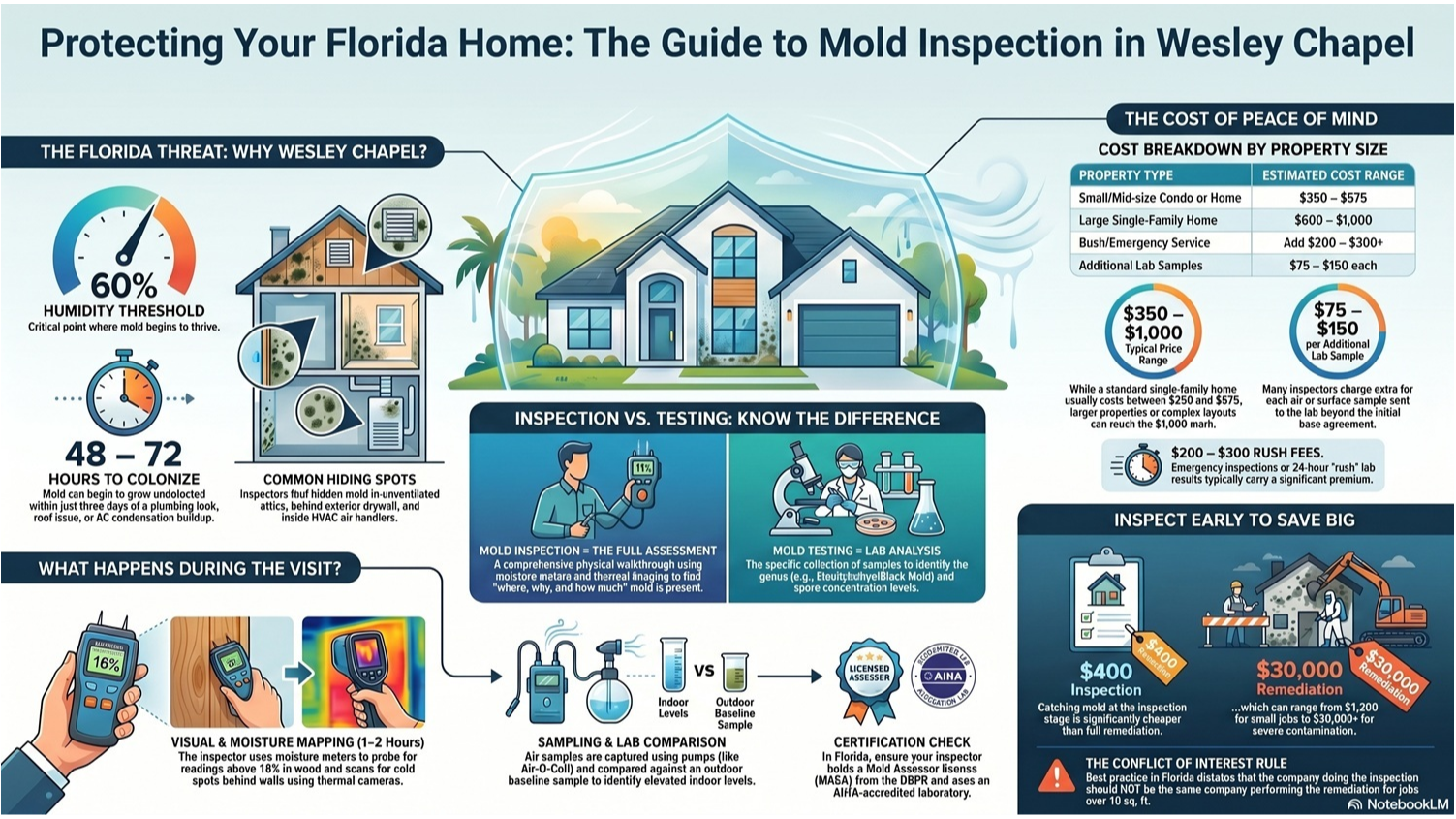
- Mold inspection costs in Wesley Chapel range from $300 to $1,000 depending on home size, testing methods, and number of lab samples required.
- Florida’s year-round humidity of 74.5% creates ideal conditions for mold growth, making Wesley Chapel one of the highest-risk areas in the country.
- Understanding the difference between basic inspection and detailed testing can prevent overpaying for unnecessary services.
- Early detection through professional inspection saves thousands compared to full remediation costs, which often range from $1,500 to $6,000.
- Only licensed Florida mold assessors should perform inspections to avoid conflicts of interest and ensure accurate results.
Wesley Chapel homeowners face a silent threat that hides behind walls, under floors, and above ceilings. With Florida’s relentless humidity and warm temperatures creating perfect breeding conditions, mold problems can develop rapidly and remain undetected until significant damage occurs. Understanding what drives the cost of professional mold inspections helps homeowners make informed decisions about protecting their investment and family health.
Wesley Chapel Mold Inspection Costs Range $350-$1,000
Professional mold inspections in Wesley Chapel typically cost between $350 and $1,000, with most homeowners paying around $400 to $600 for a standard residential assessment. This wide price range reflects the significant variables that affect inspection complexity and thoroughness.
For a typical 1,200 to 2,000 square foot Wesley Chapel home, expect to pay $350 to $575 for a basic visual inspection with standard air sampling. Larger homes exceeding 3,000 square feet or properties requiring extensive testing across multiple rooms push costs toward the $700 to $1,000 range. Professional mold assessment services in Wesley Chapel provide detailed evaluations that include moisture mapping, thermal imaging, and certified laboratory analysis to ensure accurate results.
The inspection price typically includes the initial visual assessment, moisture detection with specialized meters, collection of air and surface samples, and a detailed written report with laboratory findings. However, some companies charge separately for lab analysis fees, which can add $75 to $150 per sample to the total cost.
Florida’s Climate Makes Wesley Chapel High-Risk for Mold
Florida is widely considered the most mold-prone state in the country due to its climate. Wesley Chapel’s location in Pasco County places it squarely in this high-risk zone, where environmental conditions create a nearly perfect storm for fungal growth.
Year-Round Humidity Creates Perfect Mold Conditions
Florida’s average annual humidity of 74.5% far exceeds the 60% threshold where mold growth accelerates. During summer months and rainy season, outdoor relative humidity regularly hits 75% to 90%, creating constant pressure on indoor air conditioning systems to maintain safe moisture levels.
Mold requires just three elements to thrive: moisture, organic material (like drywall or wood), and temperatures between 77°F and 86°F. Wesley Chapel’s climate delivers all three consistently. Even brief plumbing leaks or roof damage can trigger mold colonization within 48 to 72 hours under these conditions.
Florida homeowners regularly file thousands of mold-related insurance claims annually, reflecting both the widespread nature of mold problems and the significant financial impact on property owners.
Common Hidden Mold Areas in Local Homes
Wesley Chapel’s rapid residential development over the past decade has created unique mold risk factors. Quickly constructed homes sometimes feature improperly sealed windows, inadequate attic ventilation, or incorrectly sized HVAC systems that struggle with moisture control.
Professional inspectors most commonly find mold growth in attics with poor ventilation, behind exterior walls where condensation builds up, inside HVAC air handlers and ductwork, under kitchen and bathroom sinks, in crawl spaces, and around window frames where warm air meets cold surfaces. These hidden locations often harbor significant mold colonies long before visible signs appear in living areas.
Hidden Price Drivers Beyond Basic Inspection Fees
The substantial cost range for mold inspections exists because no two homes or situations are identical. Several specific factors directly influence the final price, and understanding these variables helps homeowners avoid surprise charges or inadequate service.
1. Home Size and Square Footage Impact
Larger homes require significantly more time for thorough inspection and typically need additional sample collection points to ensure adequate coverage. Most inspection companies use square footage brackets for pricing, with fees increasing at thresholds like 1,500, 2,500, and 4,000 square feet.
A 4,000 square foot home in Wesley Chapel’s larger subdivisions requires multiple hours of assessment time compared to a 1,200 square foot condo. Inspectors must evaluate more rooms, closets, bathrooms, and potential moisture sources, directly affecting labor costs and sample requirements.
2. Testing Methods and Equipment Used
Professional mold inspections employ several testing methods, each with different cost implications. Air sampling uses calibrated pumps to collect airborne spores and provides overall air quality assessment. Surface sampling involves swabbing or tape-lifting from suspect areas to confirm visible growth. Bulk sampling requires physical material removal for deep contamination analysis.
Advanced thermal imaging cameras detect moisture behind walls without destructive exploration, adding value but increasing costs. These tools reveal temperature variations that indicate hidden moisture sources, potentially saving thousands in unnecessary demolition while identifying problems early.
3. Number of Lab Samples Required
Every sample collected during inspection gets sent to certified laboratories for microscopic analysis and species identification. Basic inspections might include two to three samples: one outdoor baseline and one or two indoor air samples. However, homes with multiple suspect areas or complex layouts often require five to eight samples for accurate assessment.
Laboratory analysis typically costs $75 to $150 per sample, and these fees can accumulate quickly. Some inspectors include a certain number of samples in their base price, while others charge separately for each one. Always clarify sample pricing before scheduling service.
4. Rush Lab Fees and Emergency Service
Standard laboratory turnaround runs 24 to 72 hours for mold analysis. Homeowners facing real estate transactions, health concerns, or tenant situations often need faster results. Rush processing delivers findings within 24 hours but typically adds an extra fee depending on sample count.
Emergency same-day inspections command premium pricing for priority scheduling. Companies offering immediate service in Wesley Chapel often charge $200 to $400 extra for disrupting regular schedules to accommodate urgent requests.
Mold Inspection vs. Testing: Critical Difference Explained
These terms get used interchangeably, but they represent distinctly different services with separate cost structures. Understanding the distinction prevents paying for unnecessary services or missing critical assessment components.
Mold inspection is a detailed property assessment conducted by trained professionals. It includes systematic visual evaluation, moisture mapping with specialized meters, thermal imaging when appropriate, and overall evaluation of conditions promoting mold growth. The inspector examines the complete picture: current problems, potential risk areas, and underlying causes.
Mold testing specifically involves sample collection and laboratory analysis to identify species and concentration levels. Testing can occur as part of full inspection or as standalone service when mold location is already known. For insurance documentation or post-remediation clearance, standalone testing might suffice. However, most Wesley Chapel homeowners benefit more from complete inspection that includes testing components.
What Professional Inspection Process Actually Includes
Professional mold inspection follows a systematic process that moves from visual assessment to scientific analysis. The entire procedure typically requires one to two hours for average-sized Wesley Chapel homes, though larger properties or extensive contamination may take longer.
Visual Assessment with Thermal Imaging
Inspectors begin with methodical walkthrough of the entire property, focusing on bathrooms, kitchens, laundry areas, attics, crawl spaces, and any locations with water intrusion history. They use moisture meters to probe walls, ceilings, and floors for elevated readings that indicate hidden water damage.
Moisture content above 16-19% in wood or elevated drywall readings signal potential problems requiring further investigation. Thermal imaging cameras reveal cold spots behind walls caused by moisture accumulation or insulation gaps, often detecting issues before visible mold appears.
Air and Surface Sample Collection
Air sampling uses calibrated equipment like Air-O-Cell cassettes to pull measured air volumes through collection devices over five to ten minutes per sample. This captures airborne spores present at that specific moment and location.
Outdoor baseline samples are always collected simultaneously, allowing laboratory analysts to compare indoor spore levels against natural outdoor environment. Elevated indoor concentrations compared to outdoor baseline indicate problematic conditions requiring attention.
Surface sampling targets areas with visible growth or discoloration using tape lifts, swabs, or small material samples sent directly to laboratories. This confirms whether suspicious stains represent actual mold or harmless dirt, providing critical information for remediation decisions.
Laboratory Analysis and Reporting
Collected samples go to third-party certified laboratories, typically AIHA-accredited facilities, where analysts examine materials under microscopy to identify species and count concentrations. Lab reports quantify spore counts in spores per cubic meter and identify specific genera like Aspergillus, Penicillium, Cladosporium, or more serious Stachybotrys.
Quality inspectors compile laboratory results into detailed written reports with professional interpretation, moisture mapping data, and specific remediation recommendations when needed. Effective reports explain what data means for specific homes and provide clear next steps rather than just presenting raw numbers.
Early Inspection Saves Thousands vs. Remediation Costs
The most compelling argument for professional mold inspection lies in cost comparison between early detection and full remediation. Understanding this financial reality helps homeowners appreciate inspection value beyond peace of mind.
Florida Remediation Ranges $1,500-$6,000+
Mold remediation costs in Wesley Chapel vary dramatically based on contamination extent and affected materials. Small localized jobs, such as treating mold under bathroom sinks or in limited drywall sections, typically cost $1,500 to $2,500.
Moderate remediation covering one or two rooms falls in the $2,500 to $6,000 range, while severe whole-home contamination involving HVAC systems or structural materials can exceed $10,000 to $30,000 in extreme cases. These costs reflect material removal, specialized equipment rental, containment setup, and post-remediation verification.
Catching Problems Before They Spread
Mold colonies double in size rapidly under Florida’s humid conditions. What begins as minor moisture issue behind a wall can become major remediation project within weeks if left undetected. A $400 inspection that catches mold early, when confined to small areas, can prevent $5,000 to $15,000 remediation projects down the line.
Beyond financial considerations, early detection limits exposure to mold spores that trigger respiratory issues, allergic reactions, and other health effects. Children and elderly family members are particularly vulnerable to indoor air quality problems, making prevention through inspection a health investment as well as financial protection.
Choosing Licensed Florida Mold Assessors
Selecting qualified mold inspectors in Wesley Chapel requires understanding regulatory requirements and industry standards. The inspection industry varies significantly in quality, making credential verification necessary for reliable results.
Required DBPR Licensing and Certifications
Florida law requires mold assessors to hold licenses through the Florida Department of Business and Professional Regulation (DBPR) under the Mold-Related Services license, specifically a Mold Assessor license (MRSA). This represents legal requirement, not optional credential.
Florida also enforces conflict-of-interest rules prohibiting the same company from performing both assessment and remediation services on properties with more than 10 square feet of mold within 12-month periods. This regulation prevents inspectors from overstating problems to sell remediation services.
Beyond state licensing, look for certifications from recognized organizations like the American Council for Accredited Certification (ACAC) or National Organization of Remediators and Mold Inspectors (NORMI). These credentials indicate additional training and commitment to industry standards.
Critical Questions Before Hiring
Before scheduling any Wesley Chapel mold inspector, ask these important questions and evaluate response clarity and confidence. Reputable professionals welcome informed homeowners and have no hesitation explaining their processes.
Important questions include: Are you licensed as a Florida Mold Assessor (MRSA) with DBPR? Do you carry errors and omissions insurance and general liability coverage? Which certified laboratory do you use, and is it AIHA-accredited? Are lab fees included in quoted prices or billed separately? Will you provide written reports with moisture readings, lab results, and remediation recommendations? How long will inspection take, and when will results be available?
Companies offering “free mold inspections” often have financial incentives to exaggerate problems for remediation sales. Independent assessors provide unbiased evaluations without conflicts of interest, making their services worth the investment cost.
Professional Mold Inspection Protects Your Wesley Chapel Investment
Living in Wesley Chapel means accepting Florida’s heat and humidity as permanent environmental factors, but it doesn’t require accepting mold as inevitable. Professional inspection represents one of the smartest, most cost-effective investments homeowners can make in property health and family wellbeing.
The financial argument speaks clearly: catching mold problems at the $400 inspection stage versus $10,000 remediation stage makes inspection necessary preventive maintenance. Whether homeowners notice musty odors, experience recent water damage, or simply haven’t had properties checked recently, professional assessment provides valuable information for informed decision-making.
Wesley Chapel’s rapid growth and construction patterns create unique risks that require professional expertise to evaluate properly. Licensed inspectors understand local building practices, common problem areas, and effective detection methods specific to Central Florida’s climate challenges.
For detailed mold inspection and testing services throughout Wesley Chapel and surrounding Pasco County areas, TampaBayMold.net provides licensed assessment services that deliver accurate, unbiased results homeowners need for confident property decisions.
TampaBayMold.net
550 N. Reo St. Suite #300
Tampa
FL
33609
United States